I bought tickets for its one-night premiere at the IFC. Raven and I raced from our dinner to catch the 9 PM show… only to find out that it had been the night before. A tragic mistake for a one-night only show!
I recently found a full copy of the film on YouTube and we watched it. (Pro tip: the volume is a little low in the YouTube video. You can visit saveyoutube.com to download it to your hard drive. Then watch it in a desktop player like VLC with the volume turned up past the max.)
Herzog and Vasyukov glamorize life in the Taiga. The fur trappers’ existence is simple. They have few material possessions which they do not make themselves. A rifle, snowmobile and outboard motor are the lone exceptions. There’s something immensely satisfying about seeing the hunter making skis and a canoe in the fall, then using them in the winter. They are nearly completely cut off from the modern world. The only intrusion it makes into the film is when a Siberian politician visits on a boat, a curiosity to which the villagers pay little regard.
The men live for the winter hunt, and this is clearly the part of their lives which the filmmakers found most interesting. We hear more about their hunting dogs than we do about their wives or children. The only time we see real emotion from a hunter is when he describes watching a bear kill his favorite dog. Less pleasant things are talked of only briefly: the native people have been largely displaced by ethnic Russians, and those who remain are alcoholics. The protagonist of the movie was brought to Bakhta by helicopter thirty years ago to trap for the communist government. They had few supplies. Another man came with him, but he was “not up to the task” of survival.
This is a beautiful film which offers a glimpse into an increasingly rare way of life. Herzog and Vasyukov portray it as simple and remote, but I think is more due to their editing than to the reality of life in Bakhta. What about the women, who never speak in this film? Or the natives? Happy People leaves you respecting the people who live in the Taiga, but wanting to know more about them.
I recently picked up a copy of Jared Diamond’s Guns, Germs, and Steel, a self-described “short history about everyone for the last 13,000 years.” This book should have been right up my alley: it’s all about history, specifically early human history, which I don’t know much about.
Diamond’s goal is to explain why civilizations on the “Eurasian” continent developed to a much greater extent than they did in Africa, Australia or the Americas. Why did Europeans conquer the Americas and not the other way around? He wants to do this by looking for ultimate causes, not proximate ones like “Europeans had guns, while Americans didn’t.” He wants to explain this with environmental factors, not genetic ones. This seems like a nobel goal and an interesting subject for a book.
After about fifty pages, I was growing increasingly skeptical. He would make a point, present a very specious argument against it, then counter this argument. The old Straw man!
Then came the snippet that did this book in:
On the Chatham Islands, 500 miles east of New Zealand, centuries of independence came to a brutal end for the Moriori people in December 1835. On November 19 of that year, a ship carrying 500 Maori armed with guns, clubs, and axes arrived, followed on December 5 by a shipload of 400 more Maori. Groups of Maori began to walk through Moriori settlements, announcing that the Moriori were now their slaves, and killing those who objected…
Moriori and Maori history constitutes a brief, small-scale natural experiment that tests how environments affect human societies. Before you read a whole book examining environmental effects on a very large scale—effects on human societies around the world for the last 13,000 years—you might reasonably want assurance, from smaller tests, that such effects really are significant…
He’s holding this up as a small-scale example of how environmental factors can take two civilizations in different directions. The Maori (of New Zealand) and the Moriori (of the Chathams) were only separated around AD 1500. But by 1835, the Maori conquered the Moriori using disproportionate force! Diamond argues that they were able to do this because they were a stratified, agricultural society while the Moriori were loosely-organized hunter-gatherers. Such a short time-span! No western influences! Such a clean sociological experiment!
But this is incredibly misleading. The giveaway should have been “armed with guns”. The Maori did not develop guns independently. But I skimmed over this. The bit that did jump out at me was “November 19, 1835″ and “December 5″. How do we have such precise dates for an interaction between native peoples? It was enough to send me racing to the Wikipedia article on The Chathams.
Those 500 Maori came to the Chathams on a British whaling ship. They were armed with British guns. They were told of the existence of the Chathams by the sailors on the same whaling vessel. There are no hints of ultimate causes here. If the British had armed the Moriori instead, things would have turned out very differently.
I try to retain a healthy sense of skepticism when reading any non-fiction book that presents a thesis. But it stops being fun when you know that the author is willing to deliberately mislead.
I’m curious how this book won a Pulitzer Prize. Did any of the reviewers actually read it?
FRONTLINE on PBS, the documentary series that takes on the tough, complicated issues and finds them… tough and complicated.
It’s rare for me to watch a documentary and conclude that it undereditorialized, but that’s exactly the reaction I’ve had to the first few episodes of this season.
First we had The Medicated Child, which looked at the rapid increase in drug prescriptions for ADHD and Bipolar disorder in children. Frontline’s approach was to follow several families that had either put their children on drugs or decided not to. Each family had widely varying reactions. One family felt that the drugs prevented their child from committing suicide. Another felt that the drugs had led directly to their child committing suicide. And so on. I doubt that these cases are typical, but with only a few stories in the show, it’s difficult to get any sense of proportion. The issue of what’s caused the increase in prescriptions, the issue I found most interesting going into the show, was hardly touched.
Then there was Growing Up Online, which purports to look at the increasingly prominent role of the internet in the lives of kids. I was really excited about this one since, unlike with most documentaries I see, I have very direct, personal experience with this issue. I was left with the distinct impression that I knew more about growing up online than the producers did. Once again, they followed a few extreme examples. One girl created an entire online world revolving around erotic, gothic pictures of herself. Another boy was driven to suicide by cyberbullying. These are interesting cases, but again, they are so rare that they throw off all sense of balance in the episode. The show was not without its strengths, however. Some of the kids had interesting perspectives on the role of the internet that I was able to relate to. And most interestingly, it showed me how growing up online has shifted since I did it. We had AIM and email when I was a kid, but most people didn’t have blogs and there was no Facebook. We had dialup. Going online was a decision. Nowadays kids have laptops, cable and wireless connections that are always on. Being online is no longer an experience, it’s just a given.
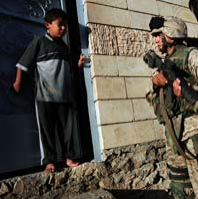
Finally we have Rules of Engagement, which looks at the incident in Haditha, Iraq. I was inspired to watch this by an interview with the director on On The Media, one of my favorite podcasts. Haditha is an especially thorny issue, even by FRONTLINE standards. The Marines say one thing. The Iraqi’s say something completely different. Several Marines have changed their stories, but only after being offered immunity to testify against one another. There’s essentially no physical evidence. It’s just one man’s word against another’s. I certainly feel as though I understand the Haditha situation better after watching this documentary, but I have no idea who to believe.
I guess this is a problem inherent to the documentary. Is a mere data dump valuable? Is it possible? Is it better to editorialize explicitly and make an argument, or is it better not to take sides and only incidentally present a skewed or unbalanced view.
I don’t know the answers to any of these questions, but I do know that FRONTLINE has left me wanting unqualified statements of fact. Maybe I’ll go read some math books…
This is the last post in this series before we resume our regularly scheduled programming. I still discover most of my music through Pitchfork’s lists, so I’ve included links to those lists where appropriate. You may also want to check out my Favorite Albums of 2006.
Silent Shout (The Knife – 2006; PF #1 album of 2006)
Pitchfork’s fave album of 2006 is one of my fave albums of 2007. The opening beat/song really pull you in, and the first nine tracks are all good, with “Marble House” and “Like a Pen” being standouts. The last two tracks are just miserable though, I mean “Lily, Rosemary, and the Jack of Hearts” bad. This was the only album that I discovered through the 2006 list that I really enjoyed.
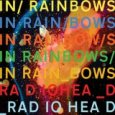
In Rainbows (Radiohead – 2007; PF #4 album of 2007)
With its innovative “pay what you want” online distribution, it’s a good thing Radiohead made such a great album. It sounded nondescript the first time I listened to it, but quickly grew on me. Favorite tracks include “Bodysnatchers”, “Weird Fishes/Arpeggi” and “Jigsaw Falling into Place”.
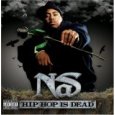
Hip Hop Is Dead (Nas – 2006)
I’ve already reviewed this album before, so it should come as no surprise that I liked it! It’s too bad that every Nas album gets compared to his first. Maybe he wishes he pulled a Radiohead instead.
Music for 18 Musicians (Steve Reich – 1974; PF #53 album of the 1970′s)
It’s on the PF list, but The Rest Is Noise inspired me to listen to it. I enjoyed it the first time through, but couldn’t say I was really inspired. Then I started hearing those bass clarinets everywhere: the sound of a bus engine, the rhythm of a toothbrush across my teeth. For bonus points, try picking out the 18 musicians. (I think this would be really hard!)
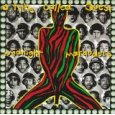
Midnight Marauders (A Tribe Called Quest – 1993; PF #75 album of the 1990′s)
I could do without the interludes, but the main tracks are fantastic grooves, combining jazz, funk and hip-hop. Favorite tracks include “8 Million Stories”, “Sucka Nigga”, and “Midnight”.
Blue (Joni Mitchell – 1972; PF #86 album of the 1970′s)
I first heard Joni Mitchell in high school but was nonplussed. Then I heard a CD of songs whose names all contained the word “California” on it about two years ago. Joni Mitchell’s “California” made an appearance right after Tupac’s “California Love”. It’s certainly a ridiculous sequence, but I’m been torn on whether it’s also a good one. It’s tough to follow “California Love”, so maybe you should just go for something as different as possible. Once you get used to her voice, this is a really enjoyable album.
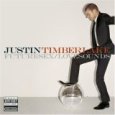
FutureSex/Love Sounds (Justin Timberlake – 2006; PF #25 album of 2006)
As a friend of mine explained, we should all be thanking JT: “I didn’t even know sexy was gone, but he’s bringing Sexyback!” I was also really impressed by his concert at Madison Square Garden, which I saw on TV. You can watch clips of it here.
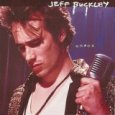
Grace (Jeff Buckley – 1994; PF #69 album of the 1990′s)
The most famous accidental drowning of the last 15 years. I prefer the harder rock songs to the more down-tempo ones like “Lilac Wine” and “Hallelujah”. Faves are “Last Goodbye” and “Eternal Life”.
In case it hasn’t been clear from the previous posts, these are movies that I enjoyed in 2007, rather than movies that came out in 2007. I couldn’t hold myself to five movies this year, so I went with seven. Several of these came from “best of 2006″ lists like the Oscars. A few others came from the BAFTAs.
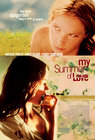
My Summer of Love (Pawel Pawlikowski – 2004)
With only three real characters, this is a very simple, tightly-constructed movie. There’s nothing excessive about it. It’s carried by its strong themes: class, adventure, deception. The fact that the story revolves around a lesbian relationship is never mentioned — its light treatment here makes films like Brokeback Mountain seem very heavy-handed in comparison. I liked Pawel’s explanation of the film:
If you wanted to make a film about British teenagers it would be… well, it wouldn’t interest me, let’s put it like that. They’d be listening to music I hate, watching TV all the time, and talking about Big Brother. I needed to remove it, to get to the essence of adolescence without the paraphernalia of today. In a way I am arrested in my adolescent emotions, like most of us I think are, so [the film is] very personal, funnily enough, despite it being about two girls.
Touching the Void (Kevin Macdonald – 2003)
Another BAFTA winner, this is a documentary about Joe Simpson and Simon Yates’ mountaineering expedition in the Andes. They’re both extremely down to earth, which makes it possible to relate to the extraordinary experience they went through. Simpson has dealt more directly with the prospect of his own death than just about anyone else, and his night in the crevasse is at the heart of this movie. His reaction isn’t heroic, but it’s very genuine.
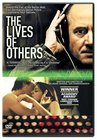
The Lives of Others (Das Leben der Anderen) (Florian Henckel von Donnersmarck – 2006)
I saw two excellent German movies this year, both featuring Ulrich Mühe (the other being Zwartboek, technically a Dutch movie). Ironically, Mühe died a few weeks after I saw this movie. It follows a writer in Eastern Germany and a Stasi agent (Mühe) assigned to observe him. I don’t want to say too much, but the ending is absolutely perfect. It couldn’t have been done any better.
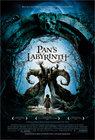
Pan’s Labyrinth (Guillermo del Toro – 2006)
The combination of Spanish Civil War and a child’s fantastical imagination is strange, but it works surprisingly well. Innocence and Experience would be the themes here. An interesting side note: by 1944 the Spanish Civil War was almost entirely over. These really were the last holdouts.
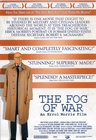
The Fog of War (Errol Morris – 2004)
An extended conversation with Robert McNamara, one of the more interesting and controversial Secretaries of Defense in the 20th century. I can only imagine how interesting it must be for someone who lived through the Vietnam War to hear what was going on behind the scenes like this. I can see why he was so hated during that war. He was a statistician during World War II managing bomber runs, and this kind of analytical approach to people informed everything else he did in his life. He views everything in a very detached way, always looking at the numbers. An interesting look at an interesting life.
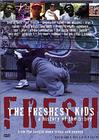
The Freshest Kids: A History of the B-Boy (Israel – 2002)
A documentary about break-dancing, or “breaking” as the dancers prefer to call it. I learned a lot about the history of hip-hop from this movie, but if you don’t care about that, there are worse things you could do than watch a few hours of break-dancing. Highly recommended if you’re curious what the difference between “rap” and “hip-hop” is.
The Room (Tommy Wiseau – 2003)
Tommy’s a genius, what more can I say? Oh right, “You’re tearing me apart, Lisa!” Trailer


 First we had
  Then there was
  Finally we have